Natural Inclusionality: From Self Recovery to Self Discovery
An essay for Occurrity, February 2025. The one that led me to the work I do now.
I write most often in the darker hours.
I handed in my dissertation, a short novel about my own life, and the feedback was a sentence I had to ask about. Your writing is unyielding. I asked what unyielding meant. They told me. It was relentless from start to finish, and it left the reader exhausted. I left university feeling my degree was a failure.
After that I wrote books and destroyed them. Eighty thousand words open on the screen. Control, shift, delete. Then control, shift, save. Gone. I did that loads of times.
I’m not doing that with this one. This one lives. It has to live.
Wholeless Nights
Bipolar & the included middle
Mathew Pay
It’s 4:16am. His heart is racing, the dream is already fading, and the only thing to do is write.
Mathew Pay first heard the words “bipolar disorder” at eighteen, as a soldier on leave. He has been writing this book for seventeen years. Then, in a Johannesburg bookshop, a historian inscribed a book to him in isiZulu. When she translated it, it read: “The soldier who does not know himself, who does not have his own house.”
Wholeless Nights is written in 27 watches: nights spent awake, restorying old memories so they survive.
A journey across continents. An ancestral soldier who, 150 years ago, dropped the name Pay and enlisted as Bushell: the basket a light was hidden under. A dragon and a phoenix inked on one body. A circle of writers and a library of books that changed his world.
Wholeless is a boundless wisdom that keeps what is wholesome in mania, depression and the ground in-between.
This is a book that builds a house and calls it home.
It began at university, with Natalie Goldberg’s Writing Down the Bones, and a conference I volunteered at as an ambassador. Inspiring Transformations brought artists, writers and actors to the University of Northampton, to work with doctors, occupational therapists and psychologists. They spent the mornings on the evidence. In the afternoons the same people wrote, danced and took parts. In the evenings they sat at one table. Shaun McNiff was there. I’ve wanted to go further with it ever since.
It’s why I keep watch. I write what comes. Then I pause. Then I return to writing. Otherwise I can’t unfreeze myself, or stop myself. Not writing things down, to me, is giving up. Walking is a little like writing for me. It’s a chance to really account for the moment. I just have to go even more slowly to write anything that makes sense.
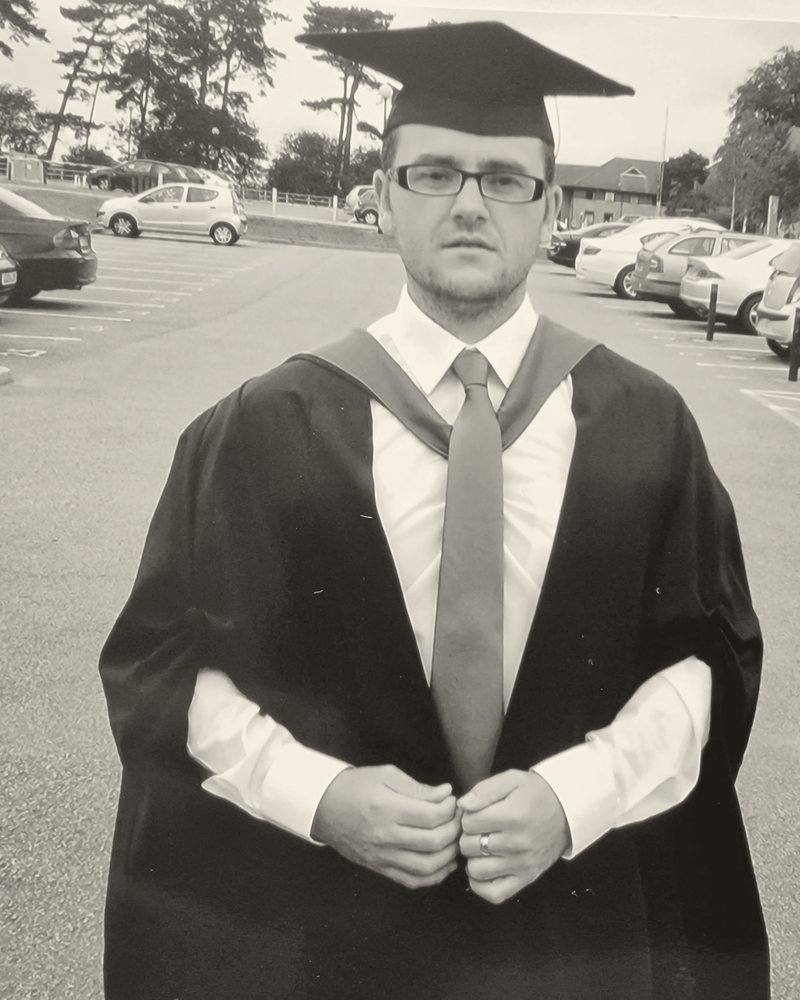
Restorying is telling a memory again, and differently, so it survives. What happened doesn’t change. Where I stand when I tell it does. Each watch takes one memory, brings it into the room at the hour, and tells it until it can be lived with, and what survives goes in. A creative writing degree and the arts and health movement gave me the word; the nights gave me the practice. It’s the belief under the book: we recover by restorying.
Books have a habit of changing me. A book passes into my hands in almost every night of this one. Take one down.
Paulo Coelho
Given to me by an old friend around 2008, in a difficult time, before university. Santiago’s pilgrimage was how my journey felt. Just messier. Way messier.
University. Keep your hand moving, she says. It’s where writing for therapeutic purposes began for me.
Maris Ross and David S. Jeans, 1974
Maris called me into her room and handed it to me. I’ve carried it ever since, all the way to Africa. Twelve chapters, each ending in the word Man. Chapter 10 is Travelling Man.
A. N. Whitehead
June 2011. Adam Blatner named him in a letter, so I went to the university library. By my own letter that week, I was the first person ever to borrow it. There was a tram ticket inside.
Terry Lynch
And then the correspondence with him. The books kept leading to people, and the people kept writing back.
Frances Masters
She trained me as a therapeutic coach, and she gave me her book. Two kinds of handing over, from one person.
Elizabeth Smart
Fifty pence at Hatchard & Daughters, a second-hand bookshop in Haworth, 2022. I’ve been rewriting her title ever since. By Farrer Terrace. In the portico of All Saints.
Hlonipha Mokoena
Love Books, Melville, Johannesburg, 9 September 2025. The one with the inscription. It’s why you’re reading this.
Dr Andrea Vassilev, 2026
I was a beta reader. My best achievement so far.
Armistead Maupin
I read it years ago and it woke something in me for a while, and then it fell back into the abyss. It woke up again on the first watch of my own book.
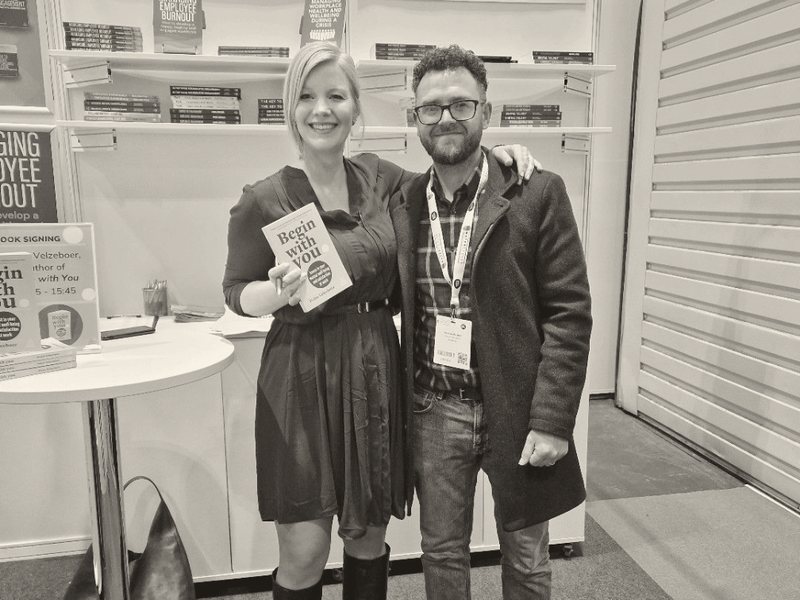
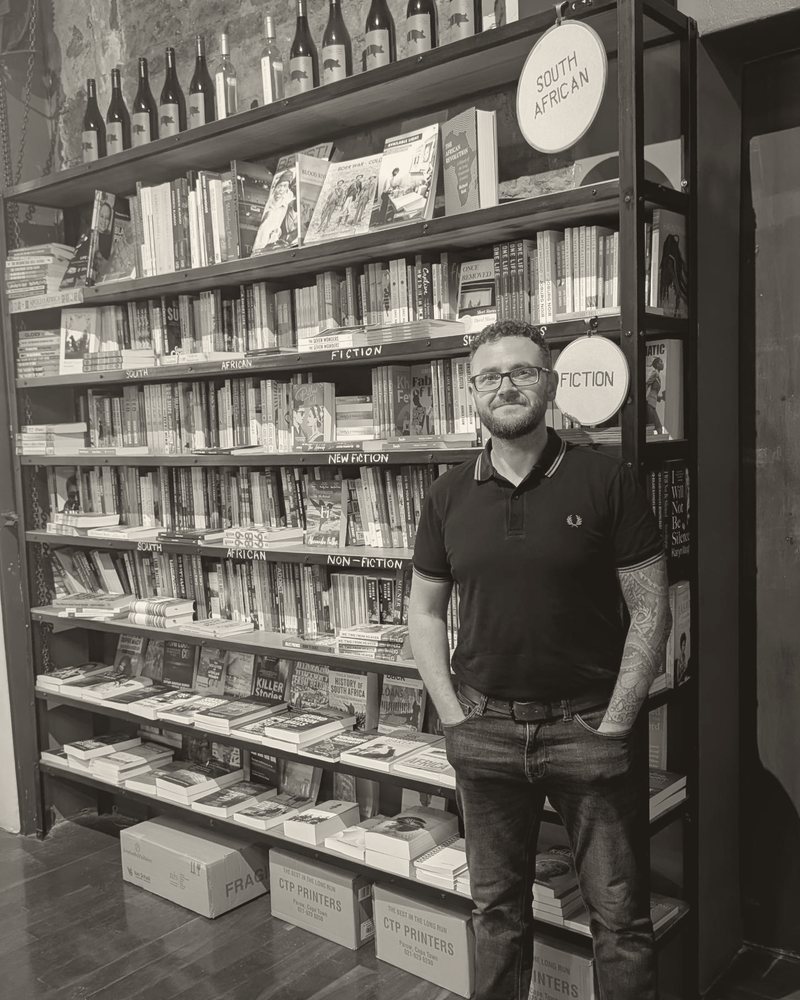
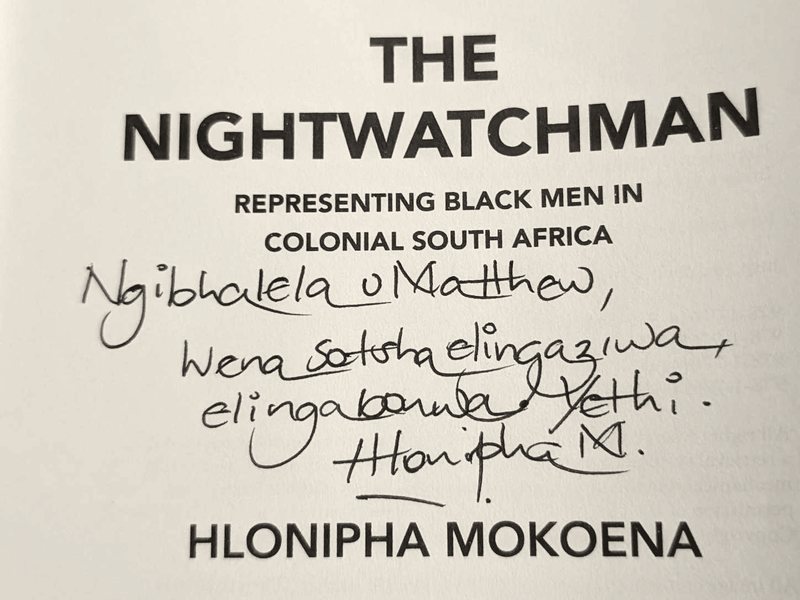
A man keeps watch through the night. He has no house, and does not know himself. A historian in a Johannesburg bookshop told him so, in isiZulu, in a book he’d asked her to sign. So he does what soldiers on watch have always done: he goes back through what he carries. Old books, old names, old selves are brought into the night one by one and tested. What survives goes in.
Nights at the watch, where earlier books and material are brought to be tested, and what survives goes in. The other stories become books within the book. It ends with a personal reflection on the process rather than a conclusion.
If a night is more than you can hold, reach a person first. Samaritans, 116 123, free, at any hour in the UK and Ireland. Elsewhere, findahelpline.com.
Twenty-seven nights. Every watch in first draft before Christmas 2026.
4 written2 still being written7 drafted, waiting for my voice3 arranged11 still to begin
A GP surgery at eighteen, a mother explaining her son, a word the doctor offers. Then a minibus ride across Northampton, and a woman behind the glass who wants him to see. It's 04:16, and the book begins.
One "t" or two. A clerk's note in the margin, an archive in Kent, and a soldier who gave up his surname in 1880. Then the dragon and the phoenix, inked on a day he won't dress up.
Johannesburg, spring. A bookshop down a flight of steps, a launch, a question he decided not to ask. He asked for a dedication, and was given his own truth instead.
Step. Another. A motorbike he rides less fast now, a pilgrimage he read about on a plane and didn't walk, and a lake that teaches him how to be water.
"Your writing is unyielding," a tutor once said. Seventeen years of books written and deleted. Then he discovers what those seventeen years were really counting.
A care home, jacket potatoes, a quiet woman on the top floor. Before she died, she handed him her book. He's carried it ever since, as far as Africa.
A proposal written at night while the professors slept. An abstract about "Mr. Bushell," in the third person because it felt safe. Then the room in Japan where he had to say it as himself.
Foster children came and went through one house on an estate, so many he lost count. A home where people were always temporary. A brother who left at sixteen, and why he understood.
Seventeen and a half. Encryption keys you could drop and lose the message. Best soldier of two hundred. The mirror afterwards, and handing it all back.
Detroit, 2008. A motel, poetry read to American radio, a stranger online, and a border he planned to cross and didn't.
No GCSEs at twenty-six, and two emails that let him in anyway. A first year, a first conference, the first time in print.
A library book with a tram ticket from 1932 inside. Fifty pence in a second-hand bookshop in Haworth. The books that came looking for him, and a chain of hands he's never joined up until now.
Written four times before and never plainly. The centre of the book.
A £1.50 horseshoe magnet, a small lie at a till, a park bench, and forty-seven printed pages that changed how he saw everything.
"Nature herself never excludes you. Only some people, in some places do." A decade of letters with the man who wrote it.
A psychiatrist and pioneer of psychodrama, a stranger who answered his first letter the same day: two questors at the edge of the old ways of thinking. He pointed towards the caring professions, a road he was already on.
Night shifts where John Clare was kept, his grandfather's Penguin book, and a helicopter pilot who borrowed it and never gave it back.
The day everything stopped, and the day the drinking stopped with it. Two years of a programme, and a name for what bipolar never reached.
Francis Masters trained him as a therapeutic coach, his first step from lived experience into a profession. She named what he carried, and gave him her book. Three kinds of handing over from one woman.
A man on morning television, an email, a chapter that came of it. A weekly circle of thinkers, a chapter he was invited to write and didn't, and the first of them to die.
A physicist who spoke of devotion and an old way of counting in the same breath. A way of counting and a way of loving in one conversation.
A long ride north, and a house by the sea where Louie Gardiner taught him presence in action. Not a lesson but an experience: mirrors became windows.
Rev. Roy Reynolds wrote with many people, and with him. He offered four ways of thinking and doing, from fixing things to the inviting emptiness and beyond. Then his death.
A pandemic, fifteen-hour days, and a comment on LinkedIn from a stranger who shared his name. A dining table, a photo of his daughters on the fridge, and happy tears for the first time in years.
A peer in the support group, then the first person he coached, the case study behind his coaching submission, then a friend. Long silences between them, and then the online recovery community, where they shared networks and time again. This watch is for him.
The work he does now, shaped by Vinnie: lived experience recovery organisations, where people who have been through it lead the way for those coming after.
Not a conclusion. Written from the desk after the last night: what he brought, what didn't survive, what he still doesn't know.
Walk the book on the beach, and leave your thoughts beside a watch in your own notebook →
Notes are public: they go into the book’s room on the beach, where anyone can read them.
An essay for Occurrity, February 2025. The one that led me to the work I do now.
My review of Inspiring Transformations, the University of Northampton’s applied arts and health conference, in September 2009. It came out in the journal’s second issue, and it was my first time in print.
A reflection for the Presence in Action community, after four days in Portobello. Not mirrors. Windows.
Step. Another. One foot follows the other.
A chapter of mine for Matthew Green and Chantal Dawtrey’s coming book.
Beta reader for my friend and mentor Dr Andrea Vassilev’s workbook on self-stigma and bipolar.
Bipolar Now, the podcast I co-hosted with Mike Lardi: Emotional Fitness, with Matthew Green and Chantal Dawtrey, March 2022. The Reality Check, on men’s mental health, June 2024. Best Practice Network, for Mental Health Awareness Week, May 2025. I am Enough: what if healing requires fierce self-compassion? March 2026.
Articles in newspapers and industry magazines. Poems and short stories. Plays that were performed. And the posts on LinkedIn.
Anyone can read what’s left here. Nobody watches it as it comes in, so it’s not the place for an emergency. Finding support is there for that.